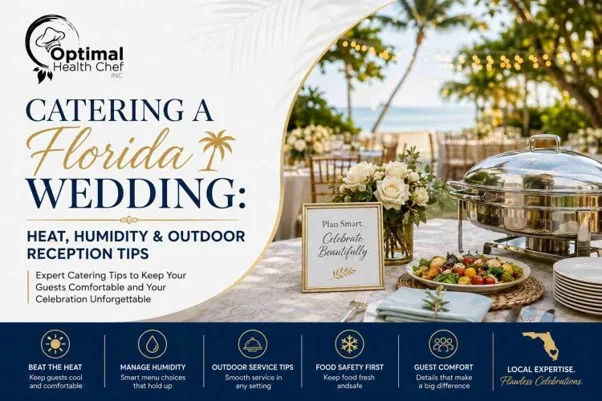
Florida weddings can be beautiful, but heat, humidity, sudden rain, and storm season can make outdoor food service tricky. Good planning keeps the meal fresh, safe, and enjoyable from the first bite to the last toast. The right menu, smart serving times, shade, cold storage, and a clear weather backup plan can make a big difference, especially for couples planning celebrations in places such as Palm Beach County. These Florida wedding catering tips can help you plan with confidence.
Menu Choices That Hold Up in the Heat
A Florida wedding menu should taste great and handle warm weather well. Outdoor service works best when the menu is planned around the setting, serving time, and length of the reception.
Heavy cream sauces, delicate toppings, and foods that spoil quickly can become harder to manage during a hot outdoor event. Instead, choose dishes that keep their texture and flavor when served under controlled conditions.
Good menu choices can include:
- Grilled or roasted chicken, beef, fish, or other hearty proteins
- Roasted vegetables that hold their shape well
- Rice, potatoes, pasta, or grain-based side dishes
- Fresh fruit that can stay properly chilled
- Bread, rolls, and simple appetizers
- Desserts that are less likely to melt quickly
- Individually portioned foods for easier outdoor service
A good caterer can also help balance warm dishes with fresh choices. For example, grilled chicken with roasted vegetables and a chilled fruit salad can create a satisfying meal without relying on foods that become difficult to serve in the heat.
For couples researching the best food for outdoor Florida wedding celebrations, the goal is not to create a menu with no fresh ingredients. The goal is to select fresh foods that can be stored, prepared, and served safely.
It also helps to think about the timing of the meal. A plated dinner may offer more control than a long buffet sitting outdoors. Passed appetizers can work well before dinner, provided proper temperature control and service timing are maintained.
For more planning ideas, a helpful wedding catering guide can cover menu planning, service styles, guest needs, and reception timing.
Food Safety in Florida Heat
Food safety becomes even more important when a reception takes place outside. Florida temperatures can rise quickly, and direct sunlight can make a food table much warmer than the surrounding air.
The FDA explains the two-hour rule for foods that require refrigeration. Perishable foods should not remain at room temperature for more than two hours. If the temperature is above 90°F, the safe window drops to one hour. The FDA also advises keeping cold foods at 40°F or below and hot foods at 140°F or above during service.
That means an outdoor buffet should never be treated like a regular indoor dining table.
Professional food service should include careful temperature control, clean serving equipment, and enough staff to monitor the buffet. Cold foods need proper refrigeration or ice-based holding. Hot foods need suitable warming equipment. Food should also be replaced or refreshed instead of sitting out for long periods.
For food safety outdoor wedding heat, a few practical steps can make service much easier:
- Place food under a covered, shaded area rather than direct sun.
- Keep cold dishes properly chilled throughout service.
- Use warming equipment for hot dishes.
- Keep raw and ready-to-eat foods separate.
- Use clean utensils for each dish.
- Limit how long food remains on the serving table.
- Monitor food temperatures with reliable food thermometers.
The FDA also recommends using food thermometers because appearance alone cannot always confirm that food has reached a safe temperature.
For couples working with Optimal Health Chef Inc, discussing the outdoor setup before the event can help identify practical needs early. Ask about refrigeration, warming equipment, buffet placement, staffing, and the best serving window for the planned reception.
Hurricane Season Planning
Florida wedding planning also needs a weather backup. The Atlantic hurricane season officially runs from June 1 through November 30. NOAA notes that activity usually becomes more active from August through October, with the seasonal peak around September.
That does not mean every summer or fall wedding will face a storm. It simply means a smart plan should leave room for weather changes.
June can bring hot weather and the start of hurricane season. July and August often require extra attention to heat, humidity, rain, and outdoor comfort. September is close to the seasonal peak for Atlantic storm activity. October can still bring storm concerns, while November remains within the official season.
This is where contract planning matters. Couples should understand the caterer’s weather policy before signing an agreement. Ask what happens if a venue closes, an outdoor reception must move indoors, travel becomes unsafe, or a storm affects access to the property.
A written backup plan can cover:
- Indoor service options
- Changes to the reception schedule
- Communication procedures
- Venue access changes
- Food storage needs
- Rescheduling or cancellation terms
Weather clauses should be clear and easy to understand. A separate article about wedding weather planning can provide more guidance on red flags and contract questions.
Outdoor Reception Logistics
The right setup can make a hot reception feel far more comfortable. Start with the guest experience, not just the food table.
A covered tent can protect guests and food from direct sun. However, a tent does not automatically make an outdoor space cool. Air movement, fans, shade, and the position of the serving area all matter.
Reception timing also helps. An early evening ceremony and later dinner can reduce exposure to the strongest afternoon heat. A shaded cocktail area gives guests a comfortable place to relax while the dining area is prepared.
Keep the food station away from direct sunlight whenever possible. Place drinks in a convenient area so guests do not need to walk far for water.
Couples should also consider sudden rain. A tent with proper side protection can help, but the venue should have a clear indoor backup if weather becomes unsafe.
Bar Service in the Heat
A wedding bar needs more than chilled alcoholic drinks. Water should be easy to find throughout the reception.
Consider offering cold water, sparkling water, lemonade, iced tea, fruit-based drinks, and other non-alcoholic choices. These options give guests simple ways to stay refreshed.
Ice planning matters too. Hot weather can increase demand quickly, especially during cocktail hour. A professional team should plan enough ice, coolers, storage space, and refill access for the full event.
Bar placement also matters. Keep drinks away from direct sunlight and place hydration stations in shaded areas whenever possible.
Seasonal Menu Ideas for Florida Weddings
Seasonal food can make a wedding menu feel fresh and connected to the location. Summer celebrations may work well with grilled proteins, fresh fruit, chilled sides, and bright vegetable dishes. Fall weddings can include roasted vegetables, comforting grains, and warm seasonal flavors.
Couples can explore seasonal wedding menu ideas to build a menu that fits the month, reception style, and guest preferences.
Menu planning should also consider the length of the event. A short cocktail reception may need different foods than a full dinner with several courses.
For broader ideas about changing guest preferences and popular reception choices, a look at current wedding catering trends can also help.
Plan Your Florida Wedding With Local Experts
A well-planned menu is only one part of successful outdoor catering. The food must also reach the venue safely, remain at suitable temperatures, and stay easy for guests to enjoy.
That is why local planning matters. A professional team can review the venue layout, reception timing, food choices, weather concerns, and service style before the big day. If you are arranging wedding catering in Florida, talk through the outdoor conditions early. Ask how the catering setup will handle outdoor wedding catering Florida heat, humidity, rain, food holding, drinks, and a possible weather change.
The right plan does not remove every weather concern. Instead, it gives you a clear path when conditions change. With thoughtful menu choices, careful food handling, smart reception timing, and a dependable backup plan, your Florida wedding meal can feel relaxed, fresh, and enjoyable.
Frequently Asked Questions
1. What food is best for an outdoor Florida wedding?
Grilled proteins, roasted vegetables, rice, potatoes, fresh fruit, bread, and properly chilled salads can work well. Choose foods that hold their quality while following safe temperature-control practices.
2. How long can wedding food sit outside in Florida?
The FDA recommends keeping perishable foods out of room-temperature conditions for no more than two hours. When the temperature is above 90°F, the limit is one hour.
3. How can a wedding buffet stay safe in hot weather?
Use shade, refrigeration, ice, warming equipment, food thermometers, and active staff monitoring. Keep cold food at 40°F or below and hot food at 140°F or above.
4. What should couples do if a Florida wedding is planned during hurricane season?
Review the weather policy and contract before the event. Confirm indoor backup options, communication plans, rescheduling terms, and procedures for unsafe travel or venue closures.
5. Is an outdoor wedding in Florida too hot for catering?
Not necessarily. Reception timing, shade, tent design, airflow, menu selection, hydration, and food holding practices can make outdoor service much more comfortable. Early evening events can also help reduce exposure to peak afternoon heat.